Common Reed Warbler
Acrocephalus scirpaceus
Aves › Passeriformes › Acrocephalidae › Acrocephalus
Conservation status: least_concern
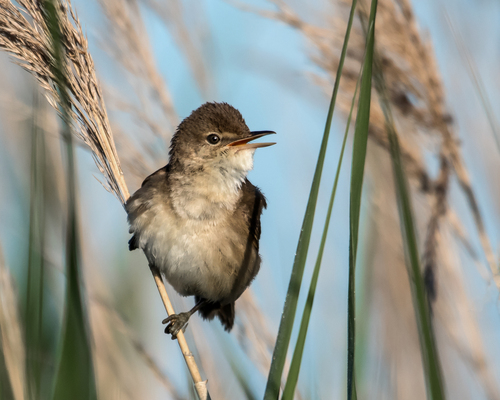
The Common Reed Warbler is a small, plain brown songbird with a slightly curved bill, found skulking among reed beds and marshes across Europe and Asia. It's best identified by its loud, repetitive chattering song and rapid, jerky movements as it clambers through vegetation, though its drab appearance makes it easy to overlook.
How To Identify
Medium-sized warblers with streaky olive-brown plumage; they have pale underparts and a noticeably dark cap or crown, helping them blend into the reeds.
Habitat
It inhabits reed beds, marshes, and wetlands with dense vegetation, particularly areas dominated by common reed (Phragmites australis) and other tall aquatic plants.
Behaviour
This warbler builds a distinctive deep cup-shaped nest woven around reed stems, and it frequently falls victim to cuckoo parasitism, yet some populations have evolved recognition abilities to reject foreign eggs.
Native Range
The common reed warbler is an Old World warbler that breeds across Europe into the temperate western Palaearctic, and is also a resident species over large parts of Africa.
Did You Know?
The Common Reed Warbler is a master mimic that can incorporate sounds from other bird species into its own song, creating a complex acoustic display. Males often sing throughout the night during breeding season, making them one of the most vocal warblers.
Create a free account to log your sightings of the Common Reed Warbler, see where it has been recorded near you and build your Wild List.
Privacy · Terms · Impressum · Credits · About the beta