Common Eider
Somateria mollissima
Aves › Anseriformes › Anatidae › Somateria
Conservation status: near_threatened
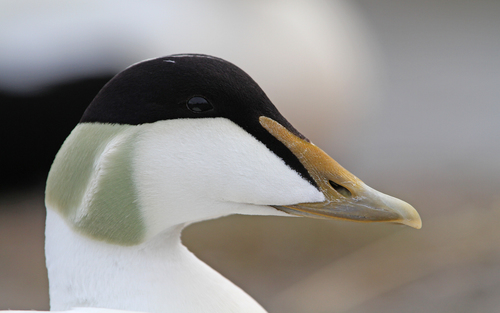
The Common Eider is a large, stocky sea duck where males display striking black-and-white plumage with a pale green nape, while females are mottled brown and far more subdued in appearance. These northern diving ducks are famous for their incredibly soft down feathers, which they pluck from their own bodies to line their nests and have historically been harvested by humans for use in insulation and bedding.
How To Identify
These substantial ducks exhibit striking sexual dimorphism. Mature males sport brilliant green head and neck feathers, while females and juveniles possess duller, mottled brown plumage suitable for camouflage.
Habitat
Common Eiders inhabit coastal waters of the Northern Hemisphere, favoring rocky shores, coastal bays, and arctic seas where they can dive for mollusks and crustaceans.
Behaviour
During the breeding season, male Common Eiders perform elaborate courtship displays involving synchronized head movements, vocalizations, and posturing to attract females.
Native Range
The Common Eider is native to the northern coasts of Europe, North America, and eastern Siberia.
Did You Know?
Common Eiders produce some of the warmest down feathers in the animal kingdom, which has made them historically valuable to humans for filling quilts and pillows. A single eider duck can yield about 25 grams of down in its lifetime.
Create a free account to log your sightings of the Common Eider, see where it has been recorded near you and build your Wild List.
Privacy · Terms · Impressum · Credits · About the beta