Long-Tailed Duck
Clangula hyemalis
Aves › Anseriformes › Anatidae › Clangula
Conservation status: vulnerable
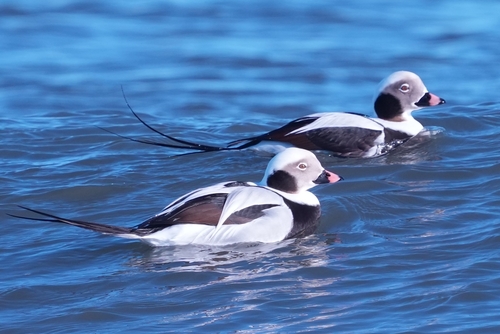
The Long-tailed Duck is a small diving duck with strikingly long tail feathers that extend well beyond its body, making it instantly recognizable among waterfowl. In winter, males display bold black-and-white plumage with chocolate-brown patches, while females are more subdued, and both sexes are known for their energetic, social behavior on northern waters and coastal areas.
How To Identify
These ducks are moderately sized, featuring dull brown or grey plumage accented by contrasting colors on the chest and flanks. Their most defining trait is a markedly elongated tail structure.
Habitat
Long-tailed Ducks inhabit shallow coastal waters, bays, and open ocean in high northern latitudes, preferring areas with strong currents and upwelling that bring food to the surface.
Behaviour
They are highly vocal ducks, especially males, producing distinctive yodeling calls and engaging in synchronized group displays during breeding season.
Native Range
The long-tailed duck breeds in the tundra and taiga regions of the arctic and along northern coastlines of the Atlantic and Pacific Oceans.
Did You Know?
Long-tailed Ducks can dive deeper than almost any other duck, reaching depths over 200 meters (656 feet) to forage on the seafloor. Males perform elaborate courtship displays with synchronized swimming and vocalizations that sound surprisingly musical for a duck.
Create a free account to log your sightings of the Long-Tailed Duck, see where it has been recorded near you and build your Wild List.
Privacy · Terms · Impressum · Credits · About the beta