Grey Butcherbird
Cracticus torquatus
Aves › Passeriformes › Cracticidae › Cracticus
Conservation status: least_concern
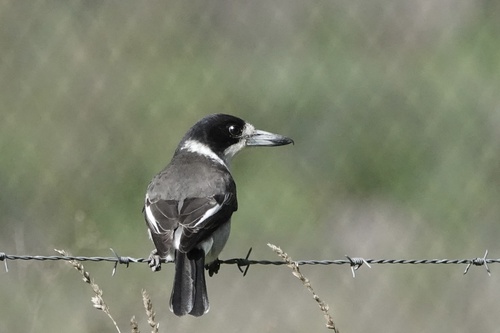
This small bird feeds on invertebrates, mainly insects, as well as small vertebrates and occasionally fruit and small seeds. It has a characteristic rollicking birdsong. It appears to be adapting well to city living.
How To Identify
This medium-sized passerine is characterized by its overall slate-grey plumage, giving it a rather uniform appearance. It possesses a robust build and often features distinguishing patches of brighter colouration on the head or wings depending on sex and age.
Habitat
It inhabits open woodlands, scrublands, and semi-arid regions across mainland Australia, preferring areas with scattered trees and shrubs.
Behaviour
Grey Butcherbirds are skilled hunters that perch conspicuously to spot prey, then swoop down to catch insects, small birds, and lizards with remarkable agility.
Native Range
The grey butcherbird is a widely distributed species endemic to Australia.
Did You Know?
The Grey Butcherbird is famous for its haunting, melodious song that sounds almost like a flute and is one of the most distinctive bird calls in Australia. Despite their musical talents, they earned the 'butcher' name because they impale prey on thorns or barbed wire to store as a pantry.
Create a free account to log your sightings of the Grey Butcherbird, see where it has been recorded near you and build your Wild List.
Privacy · Terms · Impressum · Credits · About the beta