White-Plumed Honeyeater
Ptilotula penicillata
Aves › Passeriformes › Meliphagidae › Ptilotula
Conservation status: least_concern
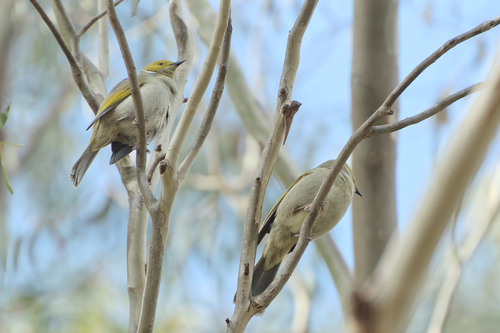
The white-plumed honeyeater is a small passerine bird endemic to Australia. White-plumed honeyeaters are common around water and are often seen in backyards and suburbs with vegetation cover.
How To Identify
They possess generally striking coloration characteristic of the family, with notable white plumes or markings distinguishing them from congeners. The overall size is comparable to other small passerines, making detailed observation critical for identification.
Habitat
It inhabits open woodlands, eucalypt forests, and gardens with flowering trees across eastern and southeastern Australia.
Behaviour
This honeyeater is highly vocal and territorial, often heard before it is seen, with a loud, distinctive call that echoes through woodlands as it aggressively defends feeding areas.
Native Range
The White-Plumed Honeyeater is endemic to mainland Australia.
Did You Know?
The White-plumed Honeyeater's distinctive white ear-coverts look like fluffy plumes, giving the bird its charming common name. These plumes are particularly prominent when the bird is excited or alarmed.
Create a free account to log your sightings of the White-Plumed Honeyeater, see where it has been recorded near you and build your Wild List.
Privacy · Terms · Impressum · Credits · About the beta