Caspian Gull
Larus cachinnans
Aves › Charadriiformes › Laridae › Larus
Conservation status: least_concern
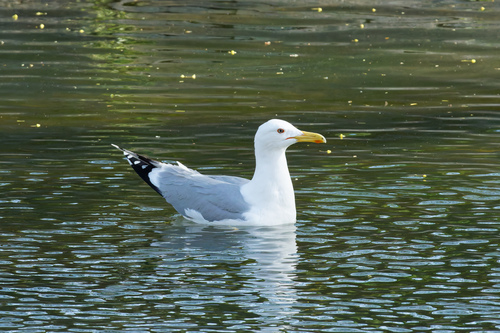
The Caspian gull is a large gull and a member of the herring and lesser black-backed gull complex. The scientific name is from Latin. Larus appears to have referred to a gull or other large seabird, and cachinnans means 'laughing', from cachinnare 'to laugh'.
How To Identify
A sizable gull featuring mottled grey feathers across its back and wings contrasting with clean white underparts. It is easily identified by its bright yellow bill and legs, and often sports conspicuous black terminal spots on the primary flight feathers.
Habitat
It typically inhabits coastal regions, large inland lakes, and wetlands across central Asia, the Middle East, and southeastern Europe.
Behaviour
Caspian Gulls are highly social and often form large mixed-species flocks, particularly at wintering grounds and refuse sites where they forage opportunistically.
Native Range
The Caspian gull is native to the Black and Caspian Seas, extending eastwards across Central Asia to north-west China.
Did You Know?
The Caspian Gull has one of the most northerly breeding populations of any large gull, and was only recognized as a distinct species from the Herring Gull in 1981 despite being widespread across Eurasia.
Create a free account to log your sightings of the Caspian Gull, see where it has been recorded near you and build your Wild List.
Privacy · Terms · Impressum · Credits · About the beta