Blue-Faced Honeyeater
Entomyzon cyanotis
Aves › Passeriformes › Meliphagidae › Entomyzon
Conservation status: least_concern
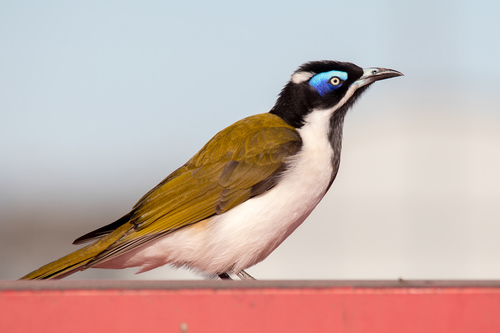
This passerine bird is notable for its distinctive plumage and is found in open woodland, parks and gardens. Its diet consists mostly of invertebrates, supplemented with nectar and fruit.
How To Identify
It has a slender, upright build characterized by overall mottled brown and grey plumage, dramatically contrasted by brilliant azure blue patches adorning the face and throat.
Habitat
It inhabits open woodlands, forest edges, and gardens across northern and eastern Australia, from tropical rainforests to eucalyptus woodlands.
Behaviour
This highly vocal and aggressive honeyeater fiercely defends flowering trees from other birds, often diving at competitors with loud, raucous calls.
Native Range
The blue-faced honeyeater is native to northern and eastern Australia, southern New Guinea, and parts of the Kimberley region of Western Australia.
Did You Know?
The Blue-faced Honeyeater has striking cobalt-blue bare skin around its eyes that becomes even more vibrant during breeding season, earning it the nickname 'Bluey' among Australian birdwatchers.
Create a free account to log your sightings of the Blue-Faced Honeyeater, see where it has been recorded near you and build your Wild List.
Privacy · Terms · Impressum · Credits · About the beta