Cape Turtle Dove
Streptopelia capicola
Aves › Columbiformes › Columbidae › Streptopelia
Conservation status: least_concern
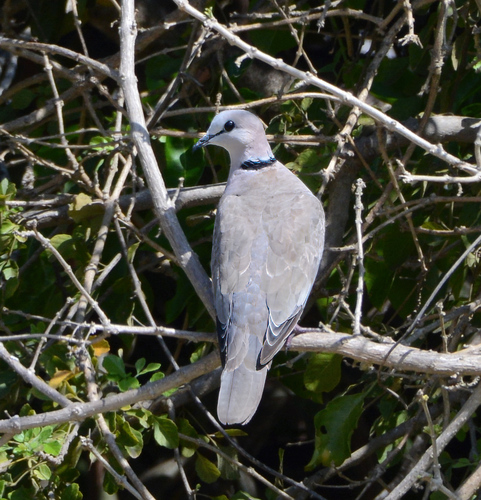
The ring-necked dove, also known as the Cape turtle dove, half-collared dove, or the Cape Lager is a widespread and often abundant dove species in East and southern Africa. It is a mostly sedentary bird, found in a variety of open habitats. Within range, its penetrating and rhythmic, three-syllabled crooning is a familiar sound at any time of the year. Its name is derived from the semi-collar of black feathers on the lower nape, a feature shared with a number of Streptopelia species. Like all doves, they depend on surface water. They congregate in large flocks at waterholes in dry regions to drink and bathe.
How To Identify
Measuring approximately 30–40 cm in length, it has soft grayish-brown plumage overall. Males are often distinguished by a subtle pattern or coloration around the neck that gives them a 'turtle' like appearance.
Habitat
It inhabits open and semi-open woodlands, savanna, thornbush, and cultivated areas across sub-Saharan Africa, typically preferring areas with scattered trees and access to water.
Behaviour
This dove is highly gregarious and forms large flocks, especially at waterholes during dry seasons, where hundreds may gather to drink in early morning and late afternoon.
Native Range
The Cape Turtle Dove is native to southern and eastern Africa.
Did You Know?
The Cape Turtle Dove produces a distinctive, mournful cooing call that sounds like 'coo-coo-coo' and is often mistaken for other dove species, yet it remains one of Africa's most recognizable sounds. Despite their gentle appearance, males engage in fierce aerial chases during breeding season.
Create a free account to log your sightings of the Cape Turtle Dove, see where it has been recorded near you and build your Wild List.
Privacy · Terms · Impressum · Credits · About the beta