Black-Faced Cormorant
Phalacrocorax fuscescens
Aves › Suliformes › Phalacrocoracidae › Phalacrocorax
Conservation status: least_concern
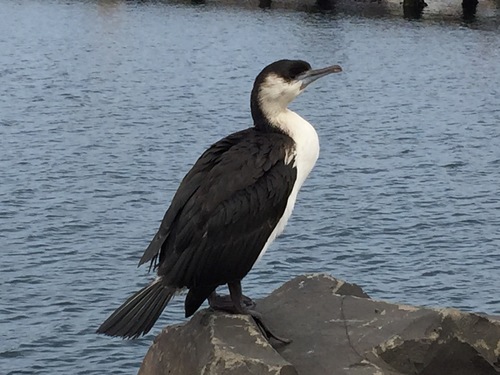
The black-faced cormorant, also known as the black-faced shag, is a medium-sized member of the cormorant family. Upperparts, including facial skin and bill, are black, with white underparts. It is endemic to coastal regions of southern Australia.
How To Identify
This species is a large, robust cormorant covered in predominantly deep black feathers. A distinctive feature is the slightly contrasting, sometimes paler skin around the face and throat, giving rise to its 'black-faced' common name.
Habitat
It inhabits rocky coastlines, offshore islands, and sheltered bays along southern Australian waters, preferring areas with strong currents and cool ocean conditions.
Behaviour
This species is a highly social cormorant that often feeds and roosts in small to large flocks, using synchronized diving techniques to herd fish into concentrated groups for easier capture.
Native Range
Black-faced cormorants are endemic to the coastal regions of southern Australia and Tasmania.
Did You Know?
The Black-faced Cormorant has a distinctive white ear patch that contrasts sharply with its dark plumage, making it one of the most recognizable cormorants in its range. Despite being excellent divers, they often hold their wings partially open to dry after fishing, a behavior shared with many cormorants.
Create a free account to log your sightings of the Black-Faced Cormorant, see where it has been recorded near you and build your Wild List.
Privacy · Terms · Impressum · Credits · About the beta