White-Eared Honeyeater
Nesoptilotis leucotis
Aves › Passeriformes › Meliphagidae › Nesoptilotis
Conservation status: least_concern
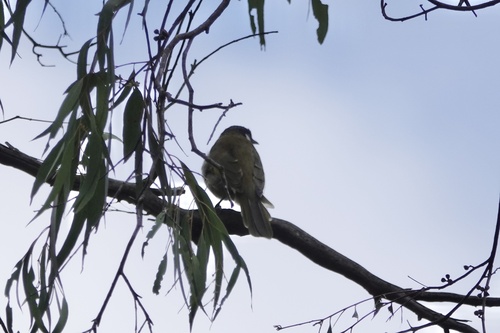
The white-eared honeyeater is a medium-sized honeyeater found in Australia. It is a member of the family Meliphagidae which has 190 recognised species with about half of them found in Australia. This makes them members of the most diverse family of birds in Australia. White-eared honeyeaters are easily identifiable by their olive-green body, black head and white ear-patch.
How To Identify
This medium-sized honeyeater features a noticeable contrast of plumage, often characterized by bright white patches or markings around the ear region. Its body typically displays muted earthy tones accented by brighter wing or tail flashes when in flight.
Habitat
It inhabits open forests, woodlands, and scrublands of eastern Australia, particularly favoring areas with flowering trees and shrubs.
Behaviour
This honeyeater is highly vocal and territorial, often heard before it is seen, producing loud, distinctive calls while defending feeding and nesting territories.
Native Range
The White-Eared Honeyeater is native to eastern and southeastern Australia.
Did You Know?
The White-eared Honeyeater gets its name from the distinctive white ear-coverts that stand out against its otherwise olive-green plumage, making it easily recognizable in the Australian bush.
Create a free account to log your sightings of the White-Eared Honeyeater, see where it has been recorded near you and build your Wild List.
Privacy · Terms · Impressum · Credits · About the beta