Gray Treepie
Dendrocitta formosae
Aves › Passeriformes › Corvidae › Dendrocitta
Conservation status: least_concern
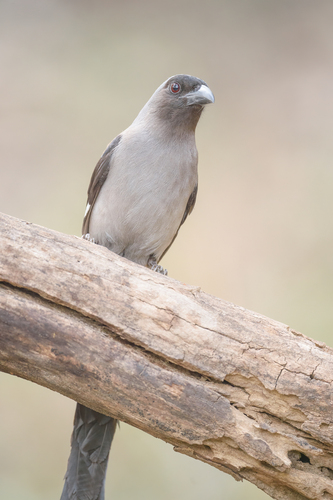
The grey treepie, also known as the Himalayan treepie, is an Asian treepie, a medium-sized and long-tailed member of the crow family. The species was first described by Robert Swinhoe in 1863. They are widely distributed along the foothills of the Himalayas in the Indian subcontinent and extending into Indochina, Nepal, southern mainland China and Taiwan. The populations vary in plumage and several are named as subspecies.
How To Identify
These are medium-sized, robust passerines characterized by a predominantly mottled gray plumage. They typically feature contrasting black markings on their wings and tail feathers, giving them sharp, defined patterns when in flight.
Habitat
It inhabits deciduous and mixed forests, particularly in foothills and mountainous regions of Asia, from the Himalayas through Southeast Asia.
Behaviour
Gray Treepies are acrobatic foragers that hop along branches and tree trunks searching for insects, and they frequently visit fruiting trees in small noisy flocks.
Native Range
The Gray Treepie is native to 柯子湖濕地 香山區台61線南側 and 溪埔子濕地.
Did You Know?
Gray Treepies are remarkably vocal birds that can mimic other species' calls and produce a variety of loud, distinctive cries that echo through forests. They are known for their cooperative family groups that stay together year-round, with younger birds helping to raise new chicks.
Create a free account to log your sightings of the Gray Treepie, see where it has been recorded near you and build your Wild List.
Privacy · Terms · Impressum · Credits · About the beta