Purple Heron
Ardea purpurea
Aves › Pelecaniformes › Ardeidae › Ardea
Conservation status: least_concern
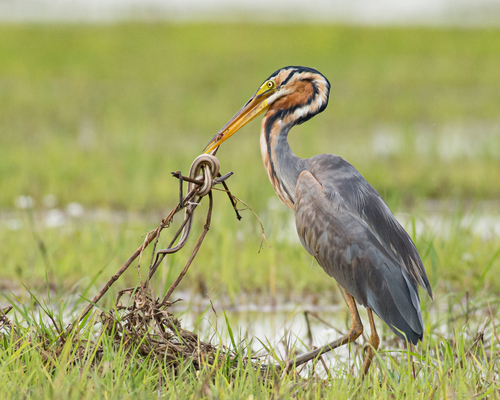
This wide-ranging heron species hunts for a range of prey including fish, rodents, frogs and insects, either stalking them or standing waiting in ambush.
How To Identify
Purple Herons are medium-sized wading birds distinguished by rich, deep coloration compared to many other heron species. Males display notable purple and rufous hues on their neck and wing feathers, contrasting with darker slate-grey or brownish tones across the body.
Habitat
Purple Herons inhabit shallow freshwater wetlands, marshes, and reed beds across Europe, Asia, and Africa, preferring dense vegetation near water bodies.
Behaviour
This species is highly secretive and nocturnal, hunting primarily at dawn and dusk by stalking slowly through shallow water or remaining perfectly still before striking at fish and amphibians.
Native Range
The purple heron breeds in Africa central and southern Europe and southern and eastern Palearctic.
Did You Know?
Purple Herons have elongated neck vertebrae that allow them to compress their necks into an S-shape, enabling them to strike at prey with remarkable speed and precision. They are also remarkably cryptic, often freezing motionless among reeds to avoid detection.
Create a free account to log your sightings of the Purple Heron, see where it has been recorded near you and build your Wild List.
Privacy · Terms · Impressum · Credits · About the beta