Eastern Subalpine Warbler
Curruca cantillans
Aves › Passeriformes › Sylviidae › Curruca
Conservation status: least_concern
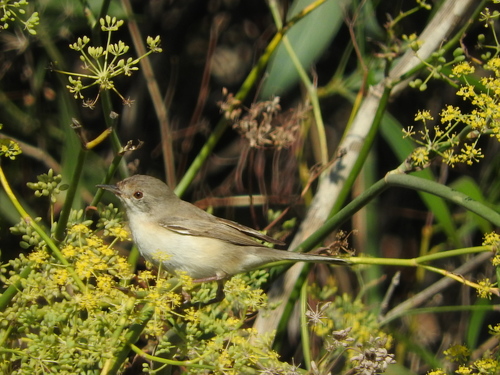
The eastern subalpine warbler is a small Sylviidae warbler which breeds in the southernmost areas of Europe. It was first described by the German naturalist Peter Simon Pallas in 1764 and given the binomial name Motacilla cantillans. The specific cantillans is Latin for "warbling" from canere, "to sing".
How To Identify
Measuring approximately 14-16 cm, it is a relatively compact songbird, typically featuring drab brownish plumage accented by noticeable yellowish streaking on the breast and flanks.
Habitat
It inhabits dry, rocky hillsides and mountainous regions with dense scrub, maquis, and low woodland, typically between 800–2,000 meters elevation in southern Europe and western Asia.
Behaviour
This warbler forages actively in thick vegetation, gleaning small insects and spiders from branches and foliage, often moving restlessly and keeping to dense cover where it can be elusive.
Native Range
The eastern subalpine warbler breeds in the southernmost areas of Europe.
Did You Know?
The Eastern Subalpine Warbler has a deceptively loud and melodious song that belies its tiny size, often singing from deep within dense scrub where it is difficult to observe. Males are known to sing persistently throughout the breeding season, sometimes delivering their song in flight.
Create a free account to log your sightings of the Eastern Subalpine Warbler, see where it has been recorded near you and build your Wild List.
Privacy · Terms · Impressum · Credits · About the beta