Laughing Dove
Spilopelia senegalensis
Aves › Columbiformes › Columbidae › Spilopelia
Conservation status: least_concern
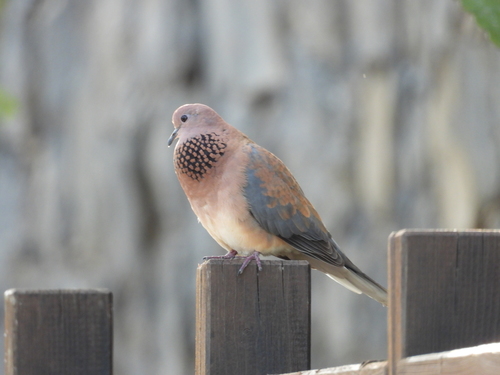
This small pigeon is often seen in pairs or small parties, and it feeds on fallen seeds, mainly of grasses, other vegetable matter and small ground insects such as termites and beetles. It is a resident breeder in Africa, the Middle East, South Asia, and Western Australia where it has established itself in the wild after being released from Perth Zoo in 1898.
How To Identify
This moderately sized dove typically features pale, buffy underparts contrasted by grayish wings and tail feathers. Its overall appearance allows it to blend seamlessly into scrubland or open bush.
Habitat
It inhabits open woodlands, cultivated areas, gardens, and scrubland in arid and semi-arid regions of Africa, the Middle East, and Asia.
Behaviour
This dove is highly social and often seen in pairs or small flocks, frequently foraging on the ground for seeds and grains while maintaining a characteristic bobbing head movement.
Native Range
The Laughing Dove is native to Africa and Asia.
Did You Know?
The Laughing Dove's distinctive call sounds like gentle chuckling or soft laughter, which inspired its common name and makes it instantly recognizable across African and Asian landscapes.
Create a free account to log your sightings of the Laughing Dove, see where it has been recorded near you and build your Wild List.
Privacy · Terms · Impressum · Credits · About the beta