Bank Swallow
Riparia riparia
Aves › Passeriformes › Hirundinidae › Riparia
Conservation status: least_concern
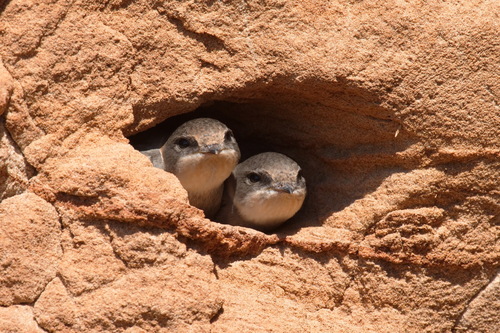
The sand martin, also known as the collared sand martin or common sand martin, and in the Americas as the bank swallow, is a migratory passerine bird in the swallow family Hirundinidae. It has a wide range in summer, embracing practically the whole Holarctic area, from Europe, across Asia to the Pacific Ocean, and throughout North America. It winters in eastern and southern Africa, southern Asia, and South America.
How To Identify
A small to medium-sized swallow characterized by a slate-grey back and wings contrasted with lighter buff or whitish underparts. It possesses a long, deeply forked tail, which helps distinguish it from other swift species.
Habitat
Bank Swallows typically inhabit open areas near water bodies such as rivers, lakes, and coastal regions, where they excavate nesting burrows in sandy or earthen banks.
Behaviour
These highly social birds are famous for their rapid, erratic flight patterns as they hunt insects in mid-air, and they nest colonially in large groups, sometimes numbering in the hundreds, within cliff or riverbank colonies.
Native Range
The bank swallow has a wide range in summer, embracing practically the whole Holarctic area, from Europe, across Asia to the Pacific Ocean, and throughout North America.
Did You Know?
Bank Swallows are the smallest swallow species in the Northern Hemisphere and can drink and bathe while flying by skimming water surfaces. They also produce a distinctive rattling call that sounds almost mechanical, unlike the melodious songs of barn swallows.
Create a free account to log your sightings of the Bank Swallow, see where it has been recorded near you and build your Wild List.
Privacy · Terms · Impressum · Credits · About the beta