New Holland Honeyeater
Phylidonyris novaehollandiae
Aves › Passeriformes › Meliphagidae › Phylidonyris
Conservation status: least_concern
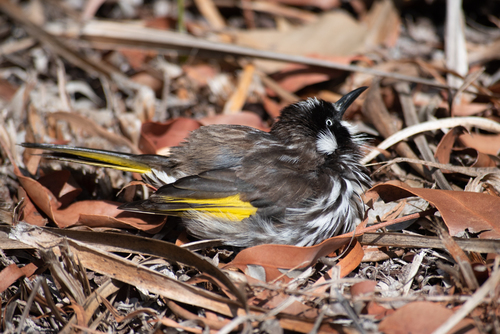
The New Holland honeyeater is a honeyeater species found throughout southern Australia. It was among the first birds to be scientifically described in Australia, and was initially named Certhia novaehollandiae.
How To Identify
It is a medium-sized passerine with generally muted plumage tones of brown, rufous, and olive green. Males may exhibit more pronounced streaking or contrasting patches around the throat.
Habitat
It inhabits eucalyptus woodlands, heathlands, gardens, and coastal scrubland across southern Australia, preferring areas with flowering plants and native vegetation.
Behaviour
This honeyeater is highly territorial and aggressive, using rapid, acrobatic flight to chase intruders and loudly vocalizing to defend feeding and nesting areas.
Native Range
The New Holland honeyeater is found throughout southern Australia.
Did You Know?
In breeding territories, females often use food resources near the nest, while males travel further out toward the edge of the territory.
Create a free account to log your sightings of the New Holland Honeyeater, see where it has been recorded near you and build your Wild List.
Privacy · Terms · Impressum · Credits · About the beta