Common Waxbill
Estrilda astrild
Aves › Passeriformes › Estrildidae › Estrilda
Conservation status: least_concern
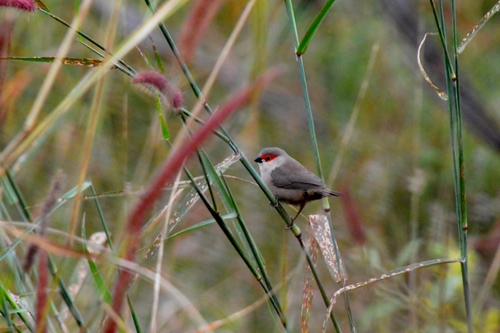
The common waxbill, also known as the St Helena waxbill, is a small passerine bird belonging to the estrildid finch family. It is native to sub-Saharan Africa but has been introduced to many other regions of the world and now has an estimated global extent of occurrence of 10,000,000 km2. It is popular and easy to keep in captivity.
How To Identify
This small passerine displays intricate plumage patterns, featuring bright tones—often yellow, reddish-browns, or olive—with distinctive streaking on the head and chest.
Habitat
It typically inhabits grasslands, reed beds, and scrubby areas with dense low vegetation near water sources across sub-Saharan Africa and has become established in parts of Asia and Europe.
Behaviour
Common Waxbills are highly social birds that roost communally in large flocks at night, huddling together for warmth and protection.
Native Range
The Common Waxbill is native to Eastern Africa, Middle Africa, Southern Africa, Western Africa, Africa, and East Tropical Africa.
Did You Know?
The Common Waxbill has a distinctive bright red bill that resembles sealing wax, which inspired its common name. Pairs often perform synchronized dancing displays where they hop side-by-side while singing.
Create a free account to log your sightings of the Common Waxbill, see where it has been recorded near you and build your Wild List.
Privacy · Terms · Impressum · Credits · About the beta