Little Cormorant
Microcarbo niger
Aves › Suliformes › Phalacrocoracidae › Microcarbo
Conservation status: least_concern
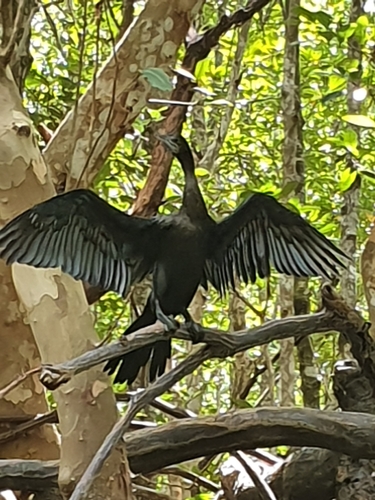
This seabird forages in small groups in lowland freshwater bodies, such as small ponds, large lakes, and streams. It captures its prey, mainly fish, which it then brings up to the surface to swallow. Like other cormorants, it is often seen with its wings spread out after coming out of the water.
How To Identify
The Little Cormorant is a compact bird, typically measuring around 40-50 cm in length. It features dark, often glossy black plumage with subtle neck markings and a noticeably robust build compared to related species.
Habitat
It typically inhabits freshwater lakes, rivers, wetlands, and coastal brackish waters across Asia and Africa, preferring areas with abundant fish populations.
Behaviour
This species is highly gregarious and often hunts cooperatively in small flocks, using coordinated diving techniques to herd fish into shallow waters for easier capture.
Native Range
The little cormorant is widely distributed across the Indian subcontinent and extends east to Java.
Did You Know?
Little Cormorants are among the smallest cormorant species and can dive to depths of 20+ meters, yet they often hunt in shallow freshwater lakes and rivers where they are remarkably agile underwater acrobats.
Create a free account to log your sightings of the Little Cormorant, see where it has been recorded near you and build your Wild List.
Privacy · Terms · Impressum · Credits · About the beta