Silver Pheasant
Lophura nycthemera
Aves › Galliformes › Phasianidae › Lophura
Conservation status: least_concern
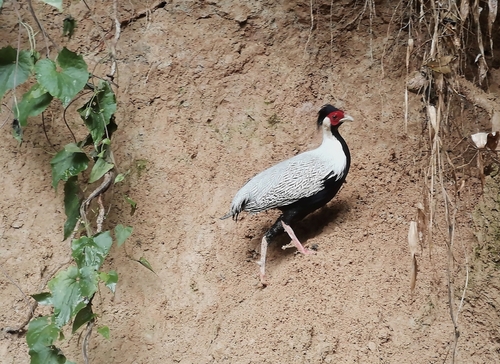
This pheasant is common in aviculture and remains common in the wild. It is a relatively large pheasant. Males of the northern subspecies, which are the largest, have white upperparts and tail (most feathers with some black markings), while their underparts and crest are glossy bluish-black.
How To Identify
Males are instantly recognizable due to their bright, silvery-blue iridescent plumage, making them significantly larger and more colorful than the duller, more camouflaged females.
Habitat
It inhabits dense forests and bamboo thickets in the mountains of southeastern China, northern Vietnam, and Laos, typically at elevations between 1,000 and 3,000 meters.
Behaviour
These pheasants are highly terrestrial and spend most of their time foraging on the forest floor, scratching through leaf litter for seeds, insects, and small invertebrates while remaining remarkably elusive despite their colorful plumage.
Native Range
The silver pheasant is native to mainland Southeast Asia and eastern and southern China.
Did You Know?
Male Silver Pheasants have striking white and black plumage with an iridescent blue-green head, while females are cryptically colored in browns and grays—a dramatic sexual dimorphism that makes them appear to be entirely different species.
Create a free account to log your sightings of the Silver Pheasant, see where it has been recorded near you and build your Wild List.
Privacy · Terms · Impressum · Credits · About the beta