Magpie-Lark
Grallina cyanoleuca
Aves › Passeriformes › Monarchidae › Grallina
Conservation status: least_concern
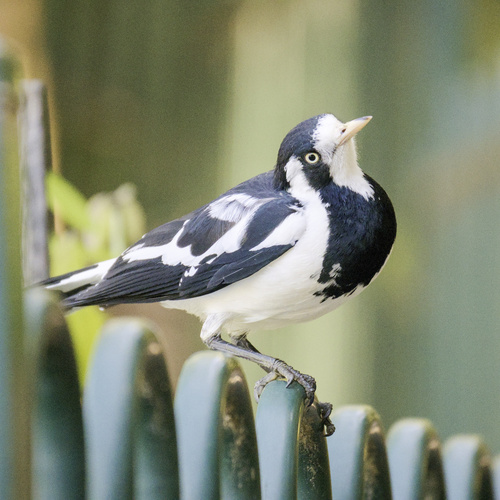
The magpie-lark, also known as wee magpie, peewee, peewit, mudlark or Murray magpie, is a passerine bird native to Australia, Timor, and southern New Guinea. The male and female both have black and white plumage, though with different patterns. John Latham described the species in 1801. Long thought to be a member of the mudnest builder family Corcoracidae, it has been reclassified in the family Monarchidae. Two subspecies are recognized.
How To Identify
It possesses a medium size with striking plumage; males are characterized by deep black markings juxtaposed against glossy blue or grey feathers.
Habitat
It typically inhabits open woodlands, grasslands, and waterside areas across eastern and northern Australia, preferring areas near water sources.
Behaviour
Magpie-larks are highly territorial and perform dramatic aerial displays, often seen in pairs working together to defend their territory and build mud-nest structures on branches or cliff ledges.
Native Range
The magpie-lark is a passerine bird native to Australia Timor and southern New Guinea. "The magpie-lark (Grallina cyanoleuca), also known as wee magpie, peewee, peewit, mudlark or Murray magpie, is a passerine bird native to Australia, Timor, and southern New Guinea.
Did You Know?
Despite its black and white plumage, its species name comes from the Ancient Greek words cyanos "dark blue" and leukos "white". The bird also has a bluish sheen to its black back sometimes.
Create a free account to log your sightings of the Magpie-Lark, see where it has been recorded near you and build your Wild List.
Privacy · Terms · Impressum · Credits · About the beta