Hartlaub's Gull
Chroicocephalus hartlaubii
Aves › Charadriiformes › Laridae › Chroicocephalus
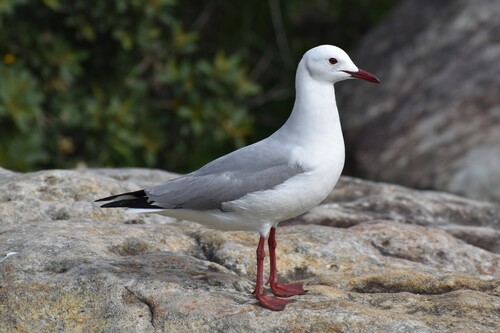
This gull is omnivorous and will scavenge at tips and feed on scraps, as well as seeking suitable small prey, often by wading in shallow water.
How To Identify
It is a moderately sized gully with striking grey plumage contrasted by bright white underparts. The species possesses a distinct, sturdy bill, which often shows noticeable yellow or orange markings.
Habitat
It is endemic to southern African coastal regions, primarily inhabiting rocky shores, lagoons, and sheltered bays along the Atlantic and Indian Ocean coasts.
Behaviour
This gull is highly vocal and social, often seen in small flocks where it forages for small fish, crustaceans, and other marine invertebrates by dabbling or shallow diving.
Native Range
Hartlaub's gull is a non-migratory breeding resident endemic to the Atlantic Ocean coastline of South Africa and Namibia. (The gull is a non-migratory breeding resident endemic to the Atlantic Ocean coastline of South Africa and Namibia.)
Did You Know?
Hartlaub's Gull is one of the smallest gull species in Africa and is named after the distinctive dark hood that covers its head and nape, which becomes more prominent during breeding season.
Create a free account to log your sightings of the Hartlaub's Gull, see where it has been recorded near you and build your Wild List.
Privacy · Terms · Impressum · Credits · About the beta