Demoiselle Crane
Grus virgo
Aves › Gruiformes › Gruidae › Anthropoides
Conservation status: least_concern
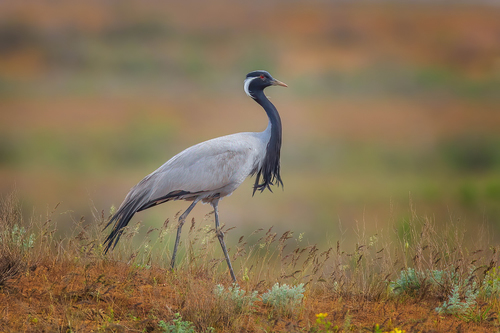
This is the smallest species of crane. It has a loud trumpeting call, higher-pitched than the common crane, and a dancing display that is more balletic than the common crane, with less leaping.
How To Identify
These cranes are medium-sized members of the crane family, characterized by their striking plumage which typically displays dusky pinkish-brown or pale hues accented by contrasting white feathers. Their overall appearance gives them a soft yet elegant profile among sturdier wading birds.
Habitat
It inhabits open grasslands, steppes, and semi-arid plains across Central Asia, from Mongolia and Kazakhstan to the Middle East.
Behaviour
They perform elaborate synchronized dancing displays involving leaps, bows, and graceful movements, which strengthen pair bonds and are among the most elegant in the avian world.
Native Range
The demoiselle crane is native to central Eurosiberia ranging from the Black Sea to Mongolia and Northeast China.
Did You Know?
Demoiselle Cranes are the smallest crane species and can fly at altitudes exceeding 26,000 feet while migrating over the Himalayas, making them one of the world's highest-flying birds.
Create a free account to log your sightings of the Demoiselle Crane, see where it has been recorded near you and build your Wild List.
Privacy · Terms · Impressum · Credits · About the beta