Yellow-Rumped Warbler
Setophaga coronata
Aves › Passeriformes › Parulidae › Setophaga
Conservation status: least_concern
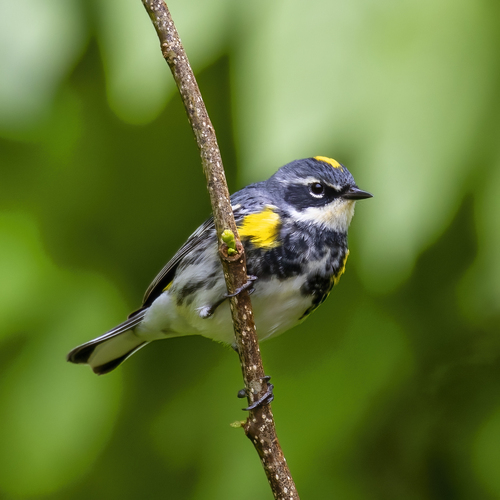
This North American bird species is primarily insectivorous, but it also eats fruit like juniper berries, especially when it is winter.
How To Identify
This small warbler is typically olive-yellow above with bright yellow flanks and a distinct rufous or orange wash visible on its rump, serving as an important identification feature.
Habitat
Yellow-rumped Warblers breed in coniferous and mixed forests, including spruce, fir, and pine woodlands, and migrate through diverse habitats including shrublands, parks, and gardens.
Behaviour
These warblers often forage in loose flocks during migration and winter, and are known for hawking insects in mid-air with acrobatic movements, or gleaning them from tree bark.
Native Range
The yellow-rumped warbler is native to North America connecting both the Pacific and Atlantic coasts of the U.S. as well as Canada and Central America.
Did You Know?
Yellow-rumped Warblers can digest waxy berries that most other birds cannot, allowing them to survive harsh winters on fruit alone when insects are scarce. This dietary flexibility makes them one of the hardiest warblers in North America.
Create a free account to log your sightings of the Yellow-Rumped Warbler, see where it has been recorded near you and build your Wild List.
Privacy · Terms · Impressum · Credits · About the beta