Yellow-Legged Gull
Larus michahellis
Aves › Charadriiformes › Laridae › Larus
Conservation status: least_concern
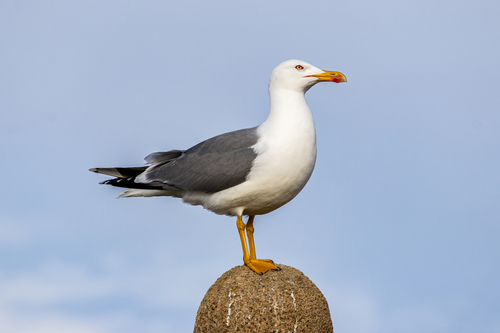
This large gull is an omnivore and opportunistic forager. It will scavenge on rubbish tips and elsewhere, as well as seeking suitable prey in fields or on the coast, or robbing smaller gulls and other seabirds of their catches.
How To Identify
A substantial-sized gull with relatively pale plumage compared to some gulls. It is easily distinguished by its bright, prominent yellow legs and correspondingly colored bill.
Habitat
It typically inhabits coastal regions, rocky cliffs, islands, and increasingly urban and suburban areas around the Mediterranean Sea, Black Sea, and Atlantic coasts.
Behaviour
These gulls are highly adaptable omnivores known for aggressively pursuing other birds and stealing food from tourists, sometimes swooping down to snatch items directly from people's hands.
Native Range
The yellow-legged gull is found in Europe the Middle East and North Africa.
Did You Know?
Yellow-legged Gulls are remarkably intelligent and have learned to open bags and containers to access human food, making them expert scavengers in Mediterranean cities. They can even recognize individual humans and hold grudges against those who've chased them away.
Create a free account to log your sightings of the Yellow-Legged Gull, see where it has been recorded near you and build your Wild List.
Privacy · Terms · Impressum · Credits · About the beta