Greylag Goose
Anser anser
Aves › Anseriformes › Anatidae › Anser
Conservation status: least_concern
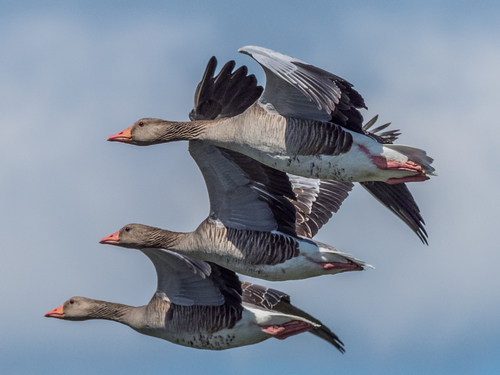
This large goose is the ancestor of most breeds of domestic goose, having been domesticated at least as early as 1360 BCE. It is largely herbivorous and feeds chiefly on grasses, and can also consume agricultural crops and small fish, amphibians, crustaceans, molluscs and insects.
How To Identify
The Greylag Goose is a substantial waterfowl, typically measuring over 5 feet in length. Its plumage is predominantly a uniform smoky grey, complemented by pale underparts. Notable features include a long, graceful neck and powerful legs adapted for wading.
Habitat
It typically inhabits wetlands including lakes, marshes, rivers, and coastal estuaries across temperate and boreal regions of Europe and Asia.
Behaviour
They are highly social birds that migrate in characteristic V-shaped flocks and communicate with loud, trumpet-like honking calls to maintain flock cohesion.
Native Range
The greylag goose has a Palearctic distribution.
Did You Know?
Greylag Geese form lifelong pair bonds and are known to 'grieve' when separated from their mates, displaying remarkable emotional intelligence among waterfowl. They were the first geese species domesticated by humans, thousands of years ago.
Create a free account to log your sightings of the Greylag Goose, see where it has been recorded near you and build your Wild List.
Privacy · Terms · Impressum · Credits · About the beta