Common Goldeneye
Bucephala clangula
Aves › Anseriformes › Anatidae › Bucephala
Conservation status: least_concern
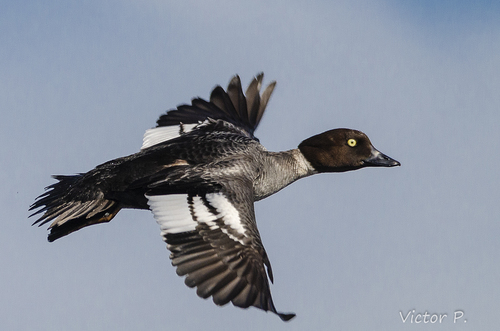
The common goldeneye or simply goldeneye is a medium-sized sea duck of the genus Bucephala, the goldeneyes. Its closest relative is the similar Barrow's goldeneye. The genus name is derived from the Ancient Greek boukephalos, a reference to the bulbous head shape of the bufflehead. The species name is derived from the Latin clangere.
How To Identify
Measuring up to 16 inches in length, the male features distinguishing iridescent gray plumage and striking yellow patches around the eyes; females are generally duller browns with subtle barring.
Habitat
It typically inhabits freshwater lakes, rivers, and coastal waters in northern temperate and boreal regions, preferring areas with abundant aquatic vegetation and clear water for diving.
Behaviour
Common Goldeneyes are expert divers that can plunge to depths of 30+ feet to forage for aquatic invertebrates and small fish, and they have specially adapted legs positioned far back on their bodies for underwater propulsion.
Native Range
The common goldeneye is found in the lakes and rivers of boreal forests across Canada and the northern United States, Scotland, Scandinavia, the Baltic States, and northern Russia.
Did You Know?
Male Common Goldeneyes produce a distinctive loud whistle with their wings during courtship flights, creating an unmistakable sound that echoes across northern wetlands. Their golden-yellow eyes are so striking that they're visible even from a distance on dark water.
Create a free account to log your sightings of the Common Goldeneye, see where it has been recorded near you and build your Wild List.
Privacy · Terms · Impressum · Credits · About the beta