Blackburnian Warbler
Setophaga fusca
Aves › Passeriformes › Parulidae › Setophaga
Conservation status: least_concern
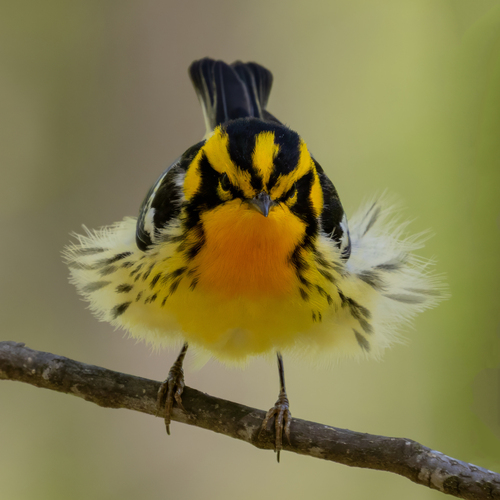
The Blackburnian warbler is a small New World warbler. They breed in eastern North America, from southern Canada, westwards to the southern Canadian Prairies, the Great Lakes region and New England, to North Carolina. They are migratory, wintering in southern Central America and South America, and are very rare vagrants to western Europe. The common name honors the English botanist Anna Blackburne.
How To Identify
The male features brilliant yellow and rusty orange patches contrasting with black streaking on the back and flanks. The female is typically duller but retains the species' characteristic warbler shape.
Habitat
It breeds in coniferous and mixed forests of eastern North America, preferring mature spruce-fir forests and hemlock stands at various elevations.
Behaviour
Males sing from high in the canopy with a distinctive, accelerating trill that ends on a high note, often perching motionless for long periods while foraging for insects among needle clusters.
Native Range
The Blackburnian warbler is native to eastern North America from southern Canada to North Carolina.
Did You Know?
The Blackburnian Warbler's blazing orange throat is one of the most brilliant colors among North American warblers, making males unmistakable during breeding season. This vibrant plumage is thought to play a role in both territorial displays and mate attraction.
Create a free account to log your sightings of the Blackburnian Warbler, see where it has been recorded near you and build your Wild List.
Privacy · Terms · Impressum · Credits · About the beta