Western House Martin
Delichon urbicum
Aves › Passeriformes › Hirundinidae › Delichon
Conservation status: least_concern
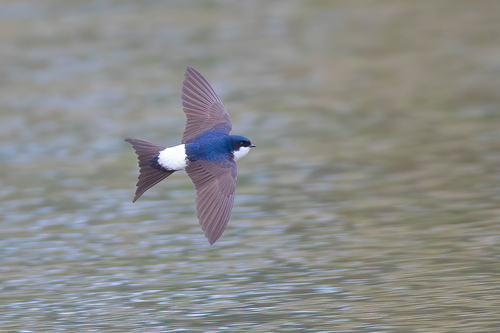
The western house martin, sometimes called the common house martin, northern house martin or, particularly in Europe, just house martin, is a migratory passerine bird of the swallow family which breeds in Europe, north Africa and west-central Asia; and winters in sub-Saharan Africa and southwestern Asia. It feeds on insects which are caught in flight, and it migrates to climates where flying insects are plentiful. It has a blue head and upperparts, white rump and pure white underparts, and is found in both open country and near human habitation. It is similar in appearance to the two other martin species of the genus Delichon, which are both endemic to eastern and southern Asia. It has two accepted subspecies.
How To Identify
A medium-sized martin, typically characterized by a slate grey back and white undersides. It possesses distinctive black markings that form prominent chevron patterns across its breast and sides.
Habitat
It typically inhabits open countryside, villages, towns, and urban areas across Europe, North Africa, and western Asia, where it nests on cliff faces and human structures.
Behaviour
House Martins are highly social birds that often nest in loose colonies and perform remarkable aerial acrobatics while hawking insects in flight, sometimes traveling several kilometers from their nests to find food.
Did You Know?
Western House Martins are among the few bird species that have successfully adapted to living almost exclusively on human buildings, constructing their distinctive enclosed mud nests under eaves and cliff overhangs. Their white rump patch is so conspicuous it can be spotted from remarkable distances, earning them the nickname 'white-rumped swift' in some regions.
Create a free account to log your sightings of the Western House Martin, see where it has been recorded near you and build your Wild List.
Privacy · Terms · Impressum · Credits · About the beta