Bay-Breasted Warbler
Setophaga castanea
Aves › Passeriformes › Parulidae › Setophaga
Conservation status: least_concern
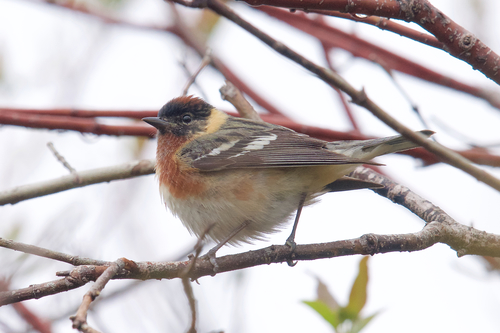
The Bay-breasted Warbler is a small songbird with a distinctive dark face mask and warm chestnut-colored flanks and crown that give it its name, making it easy to identify during breeding season. In fall migration, it becomes much duller and harder to distinguish from other warblers, but it retains a preference for coniferous forests where it often forages high in the trees.
How To Identify
It is a small, slender passerine typical of many American warblers. Males are distinguished by a noticeable wash of chestnut or bay-colored plumage on the breast, contrasting with overall muted streaking.
Habitat
It breeds in boreal and mixed coniferous forests of northern North America, particularly in spruce-dominated regions.
Behaviour
This warbler is an active gleaner that forages high in tree canopies, often moving methodically through foliage to capture small insects and occasionally feeds on insects emerging from spruce budworm outbreaks.
Native Range
Bay-breasted warblers breed in the boreal spruce-fir forests of eastern and central Canada and the far northeast of the United States.
Did You Know?
Bay-breasted Warblers undergo one of the most dramatic plumage transformations in North American warblers, shifting from a striking chestnut-and-black breeding plumage to drab greenish-yellow in winter, making them one of the hardest warblers to identify during migration.
Create a free account to log your sightings of the Bay-Breasted Warbler, see where it has been recorded near you and build your Wild List.
Privacy · Terms · Impressum · Credits · About the beta