Wood Duck
Aix sponsa
Aves › Anseriformes › Anatidae › Aix
Conservation status: least_concern
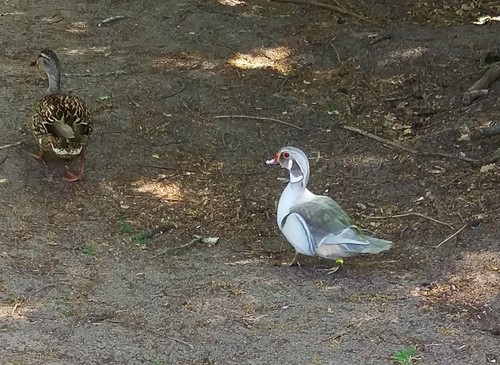
The Wood Duck is one of North America's most colorful ducks, with males displaying an iridescent green head, distinctive white facial stripes, and a burgundy chest. Unlike most ducks, Wood Ducks nest in tree cavities near wooded ponds and swamps, and ducklings must leap from their nest holes to reach the water below.
How To Identify
Male wood ducks are highly iridescent and strikingly colorful, featuring a spectacular glossy head, deep purple-green plumage, and white markings on their chest. Females are more cryptically colored than the males but still possess distinct patterning and elegant neck markings.
Habitat
Wood Ducks inhabit wooded swamps, marshes, and freshwater wetlands with abundant trees for nesting and roosting, particularly in eastern North America and scattered western populations.
Behaviour
Unlike most dabbling ducks, Wood Ducks are highly arboreal and will roost on branches; females lead their ducklings to water immediately after hatching, sometimes dropping them from nest cavities 40+ feet high.
Native Range
The Wood Duck is native to western central and eastern North America Cuba and locally in central Mexico near the Nazas river.
Did You Know?
Wood Ducks are one of the few duck species that can grip branches with their specialized feet, allowing them to perch in trees and nest in cavities high above water. Males display extraordinary iridescent plumage that shifts between green, purple, and bronze depending on the light.
Create a free account to log your sightings of the Wood Duck, see where it has been recorded near you and build your Wild List.
Privacy · Terms · Impressum · Credits · About the beta