European Starling
Sturnus vulgaris
Aves › Passeriformes › Sturnidae › Sturnus
Conservation status: least_concern
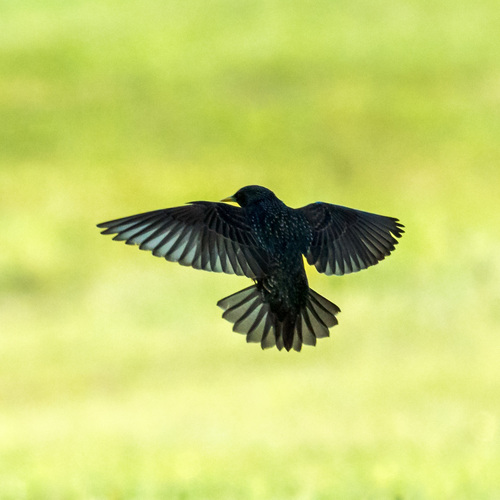
This medium-sized passerine bird is omnivorous, feeding on a wide range of invertebrates, seeds, and fruit. Large flocks can benefit agriculture by controlling invertebrate pests, though they can also be pests themselves when feeding on fruit and sprouting crops. It is noted for its gift for mimicry in literature.
How To Identify
Medium-sized starlings have sleek bodies covered in glossy, deep black plumage that shifts to iridescent purple, green, or blue when viewed in direct sunlight.
Habitat
European Starlings inhabit open and semi-open landscapes including farmland, parks, gardens, grasslands, and urban areas, typically near human settlements.
Behaviour
Starlings are highly gregarious and famous for their spectacular coordinated aerial displays called murmurations, where thousands of birds twist and turn in unison across the sky at dusk.
Native Range
The common starling has about 12 subspecies breeding in open habitats across its native range in temperate Europe and across the Palearctic to western Mongolia.
Did You Know?
European Starlings are exceptional mimics that can imitate the calls of over 20 other bird species, as well as mechanical sounds like car alarms and phone rings. They're also one of the few birds that can synchronize their molting with their breeding cycle.
Create a free account to log your sightings of the European Starling, see where it has been recorded near you and build your Wild List.
Privacy · Terms · Impressum · Credits · About the beta