Eastern Bluebird
Sialia sialis
Aves › Passeriformes › Turdidae › Sialia
Conservation status: least_concern
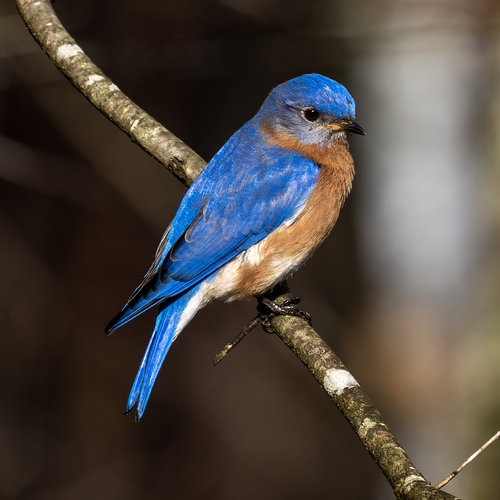
The Eastern Bluebird is a small thrush with brilliant blue upperparts and a rusty-orange breast and face that makes it one of North America's most colorful backyard birds. Males are more vibrant than females, and you can identify them year-round by their stocky build, upright posture, and distinctive soft, warbling song.
How To Identify
Eastern Bluebirds are medium-sized passerines, easily distinguished by the males' vivid sapphire blue plumage. Females and juveniles tend to be more subdued brown with blue flashes visible on the wings.
Habitat
Eastern Bluebirds inhabit open woodlands, grasslands, orchards, and gardens across eastern North America, preferring areas with scattered trees and minimal undergrowth.
Behaviour
Eastern Bluebirds are cavity nesters that readily adopt artificial nest boxes; they hunt by perching on low branches and dropping to the ground to snatch insects, also catching prey mid-air like flycatchers.
Native Range
The Eastern Bluebird is native to areas ranging from east of the Rockies, through southern Canada to the Gulf states, and extending to southeastern Arizona and Nicaragua.
Did You Know?
In traditional Haudenosaunee cosmology, the call of the bluebird is believed to ward off the icy power of Sawiskera, also referred to as Flint, the spirit of the winter.
Create a free account to log your sightings of the Eastern Bluebird, see where it has been recorded near you and build your Wild List.
Privacy · Terms · Impressum · Credits · About the beta