Mallard
Anas platyrhynchos
Aves › Anseriformes › Anatidae › Anas
Conservation status: least_concern
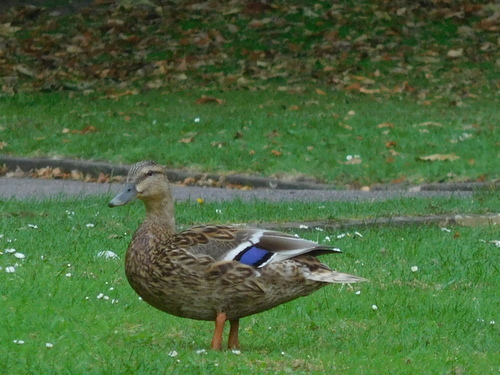
The mallard is a dabbling duck easily recognized by the male's iridescent green head, yellow bill, and chestnut breast, while females are mottled brown with an orange-and-black bill. Found on ponds, lakes, and rivers across the Northern Hemisphere, mallards are the most common wild duck and are highly adaptable to both natural wetlands and urban waterways.
How To Identify
The male features a striking iridescent green head and a white neck ring, contrasting sharply with the body's mottled brown feathers. Females are generally duller brown overall, although they also sport the characteristic bright yellow feet.
Habitat
It lives in lakes, rivers, ponds, wetlands, and urban parks across the Northern Hemisphere.
Behaviour
The Mallard dabbles at the water surface rather than diving, tipping up to reach submerged plants.
Native Range
The Mallard is native to Asia Europe and Northern America.
Did You Know?
The familiar "quack" sound is only made by females; males produce a quieter rasp.
Create a free account to log your sightings of the Mallard, see where it has been recorded near you and build your Wild List.
Privacy · Terms · Credits · Join the beta